Welcome to the big wet …

Spring has arrived, if the spring blossoms are anything to go by, but with all the rain that has fallen our region is still fairly cool with snow falling in the mountains and pretty soggy all over. Even town folk are wearing gumboots going out to the clothesline! Our October Spinning at Noreuil Park during the Albury Show prep, usually a delightful morning, looks likely to be a washout, with current high river levels and more rain expected. Fortunately alternative venues have already been discussed. Members will be advised closer to the dates.

Our planned workshop with Janet Day for the 28th September developed a last-minute hitch with Janet being unable to attend on the day. So at short notice our Jane and Julie drove down to where Janet was running her course and learnt what was needed to bring it back and pass it on at our Workshop. All with Janet’s approval. In this Newsletter is a brief article on the first part of the process. It looks interesting! I hope to bring you the next parts in later issues.

Rhonda is still doing battle with one of our floor looms. Progress is being made – we (including Rhonda) hope! I had planned to have an article on the loom project in the last issue but it didn’t happen. So just briefly for those who don’t know the idea is to warp the loom up and let Members have a go at weaving on it. No specific project except a learning exercise. Rhonda should be an expert on warping looms by then too!

This issue we have a few more handy hints from our Members – it’s fascinating what you can see and learn at our Wednesday Guild Days. We’ve also had a number of new Members come along to learn to spin. Wonderful to see things slowly returning to the new “normal”.

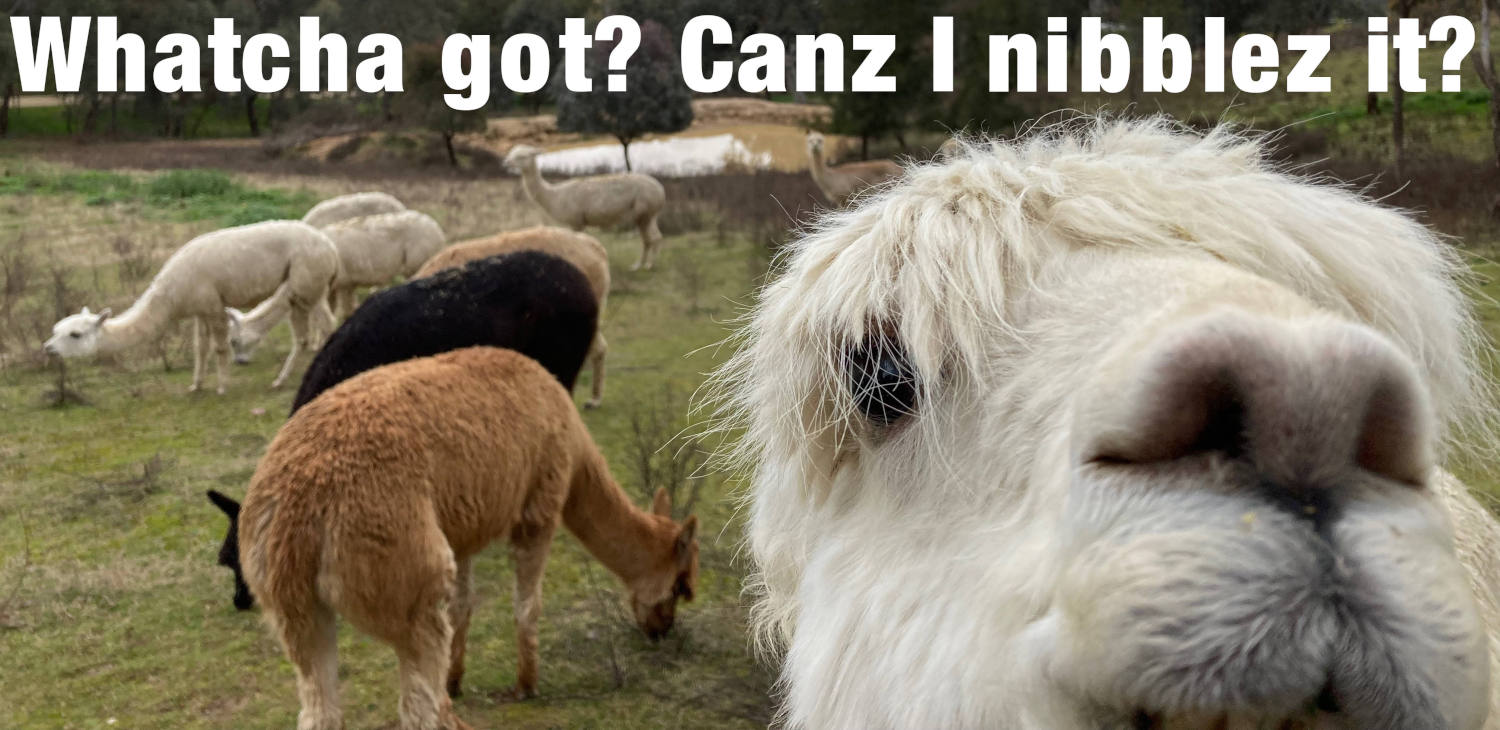
And Fleecy Follies – we’re getting into shearing season which means more lovely fleeces. It also seems to be the time of year alpacas like to try extra hard to make sure there’s heaps of VM (vegetable material) in their fleeces!

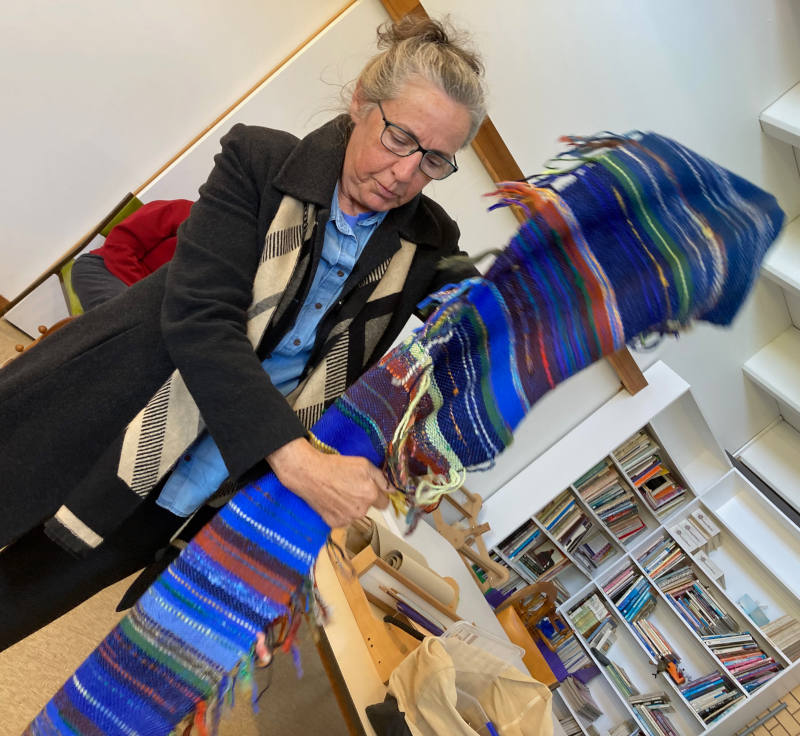
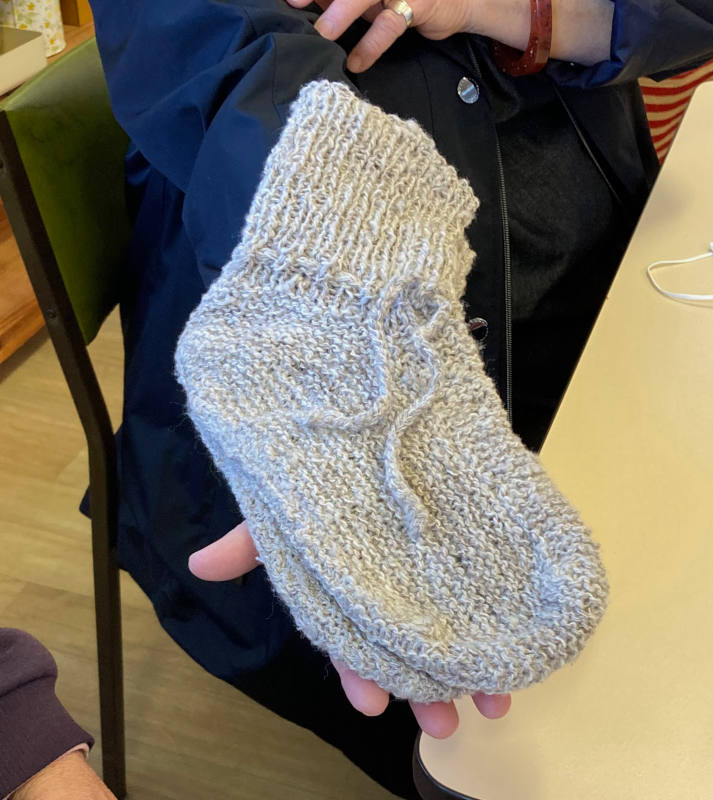
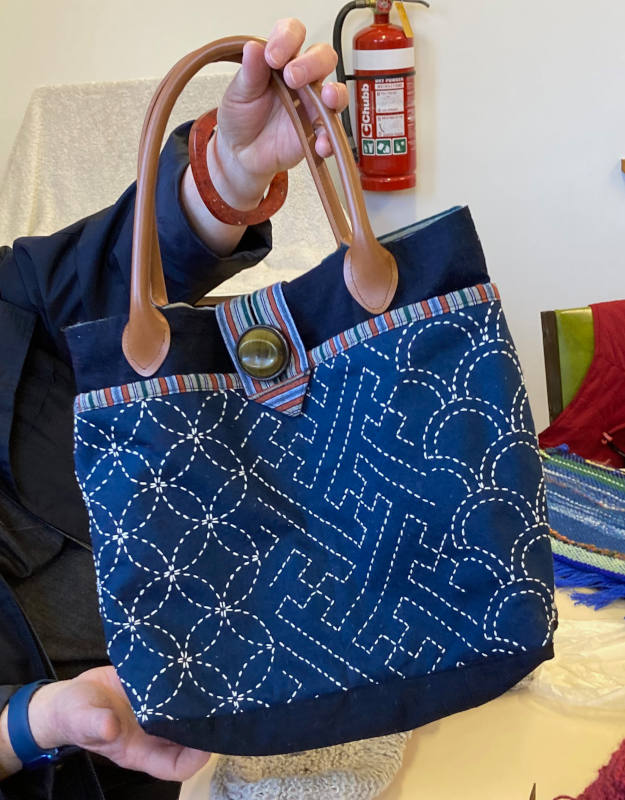
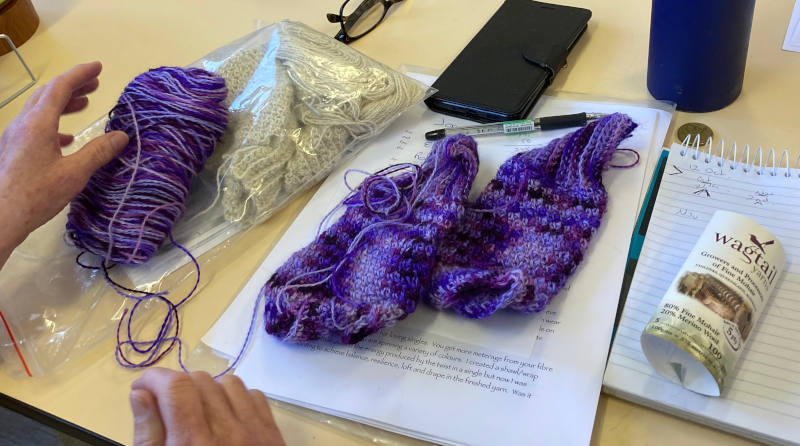
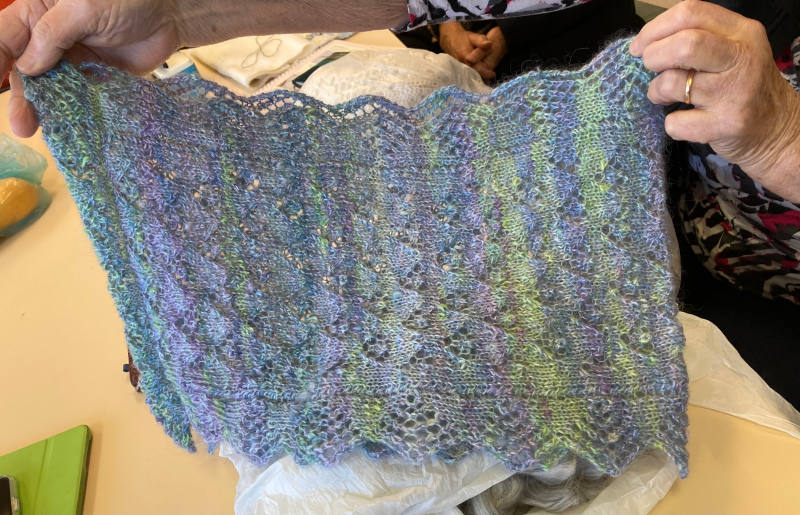
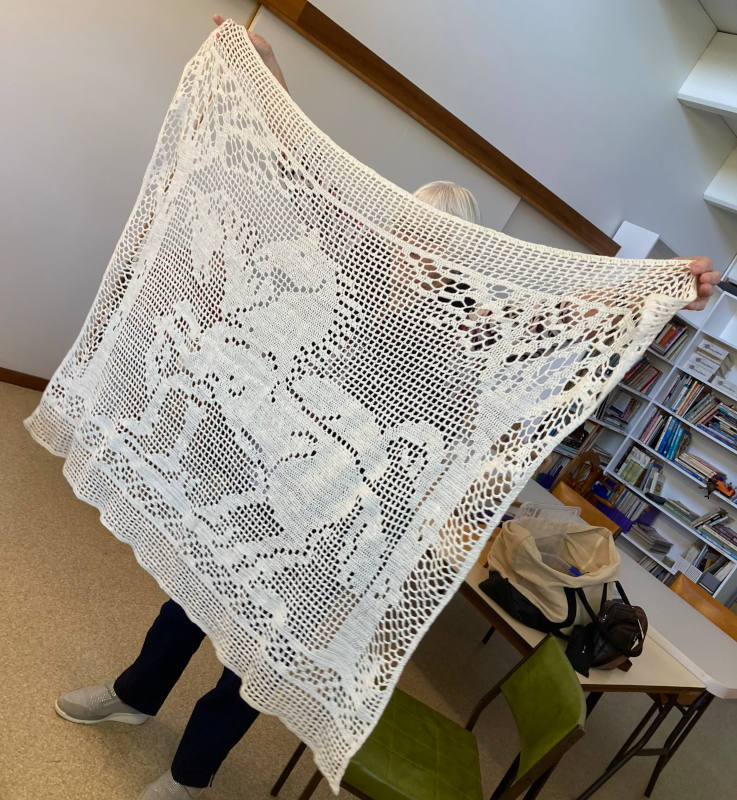
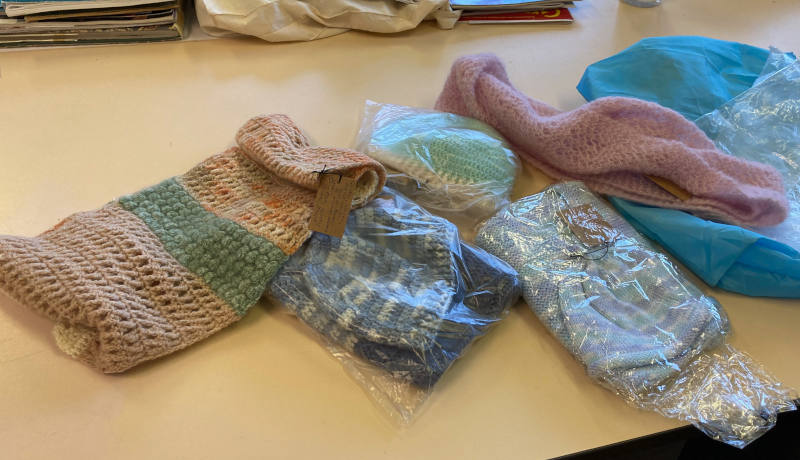
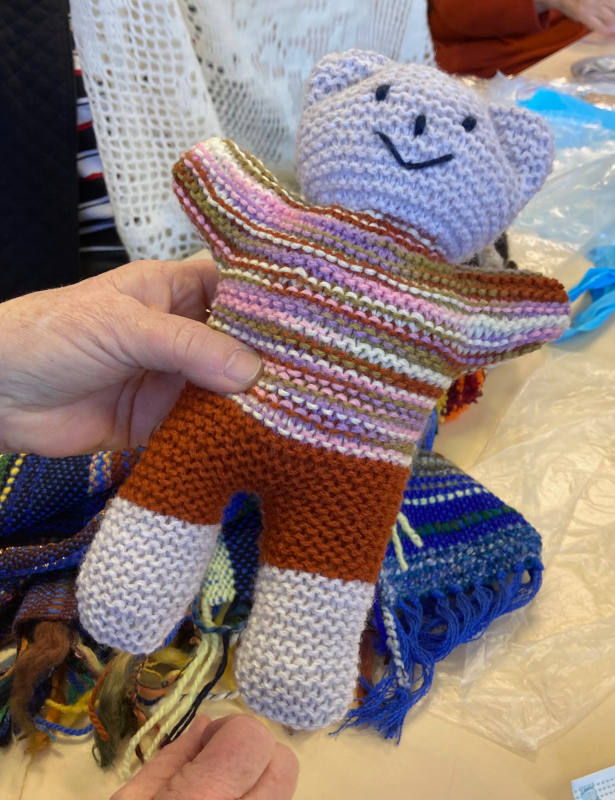
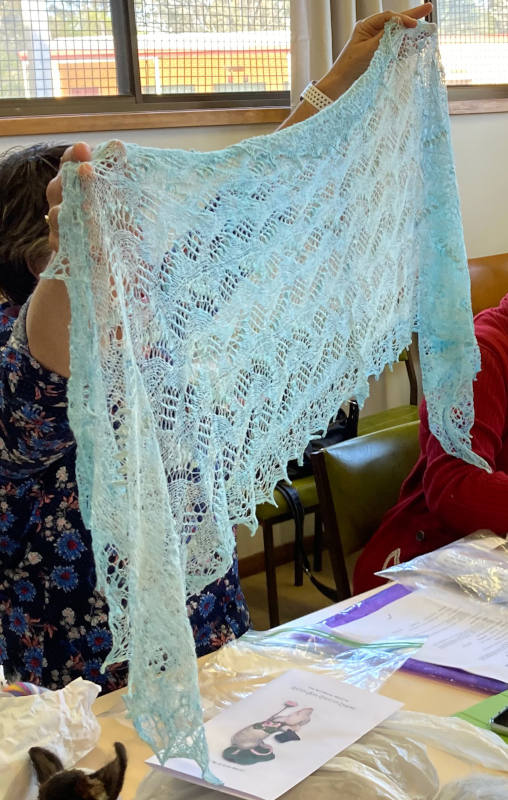
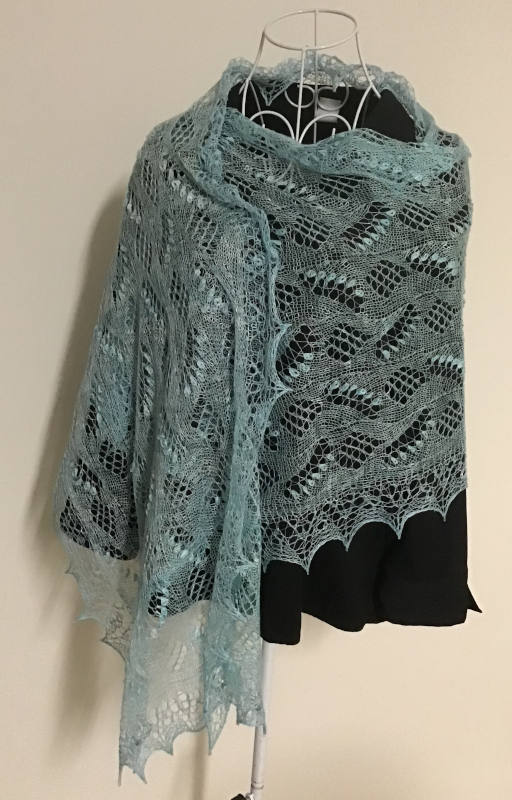
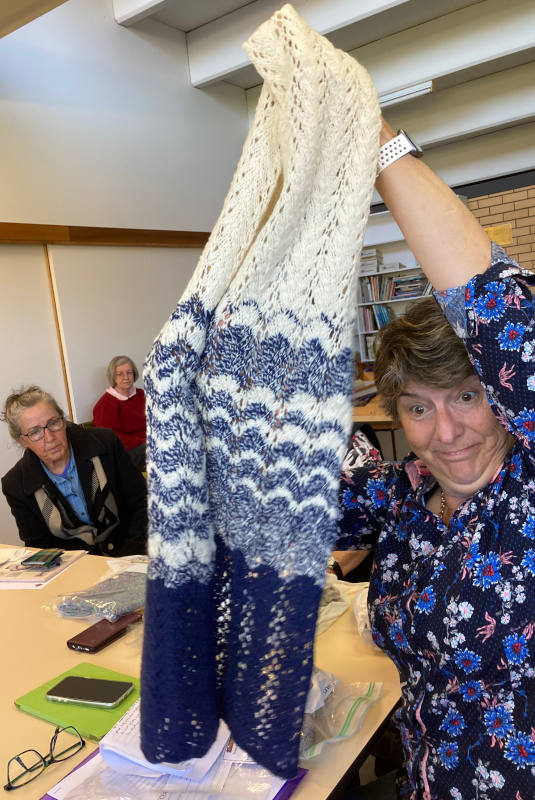
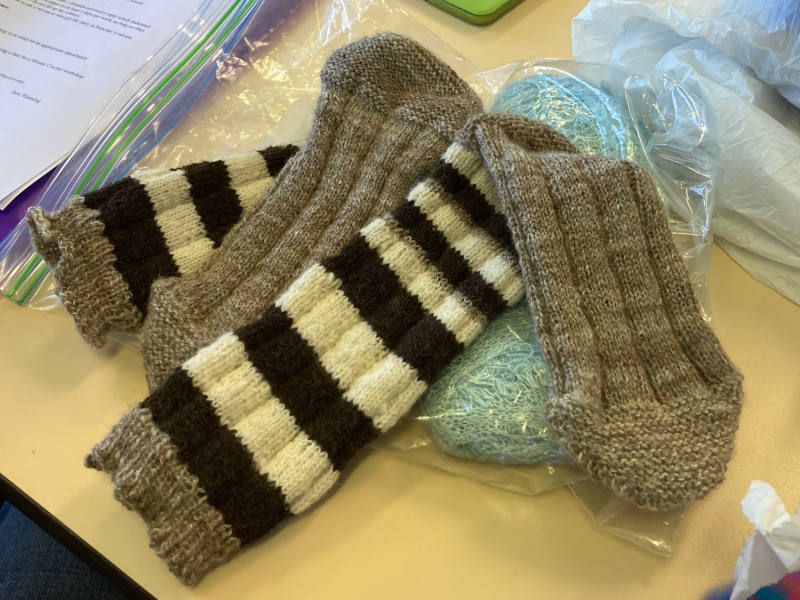
But first off, we’ll jump into the September Show & Tell!

Cheers all,
KathyW, Editor.
Committee 2022 – 2023


President:
Jane Manning


Vice President:
Debbie Carpenter


Minute Officer:
Rhonda Delahoy


Secretary(communications/events):
Julie Hofer


Assistant Secretary:
Amanda  Eaton


Treasurer:
Loraine Parker


Assistant Treasurer:
Rhonda Delahoy


Newsletter Editor:
Kathy Wheeler


Library Equipment Officer:
Rhonda Delahoy


Social Media Officer:
Kathy Wheeler


Public Officer:
Julie Hofer


KeyHolders Roster
Wednesday Work Days and Meetings

1st Wed of month – Pam J
2nd Wed of month – Jane or Julie
3rd Wed of month – Heather or Rhonda
4th Wed of month – Loraine
5th Wed of month *IF* there is one – tba


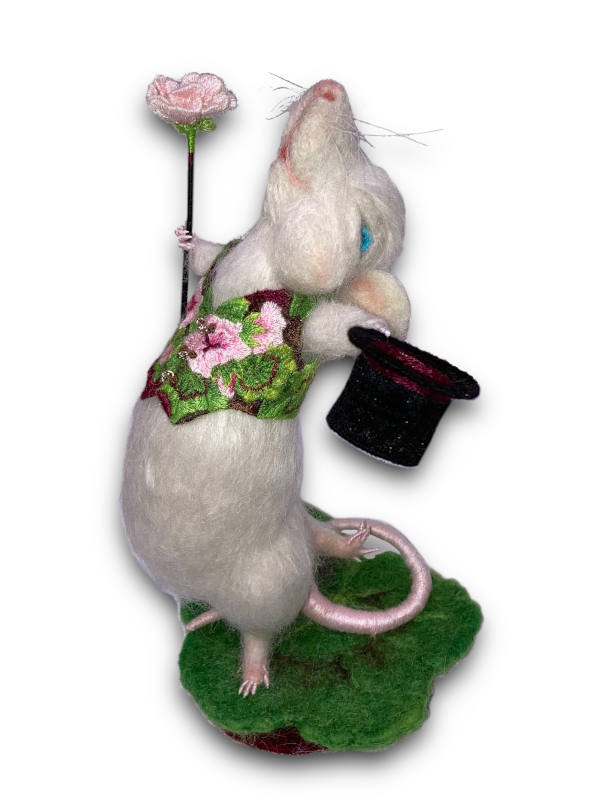
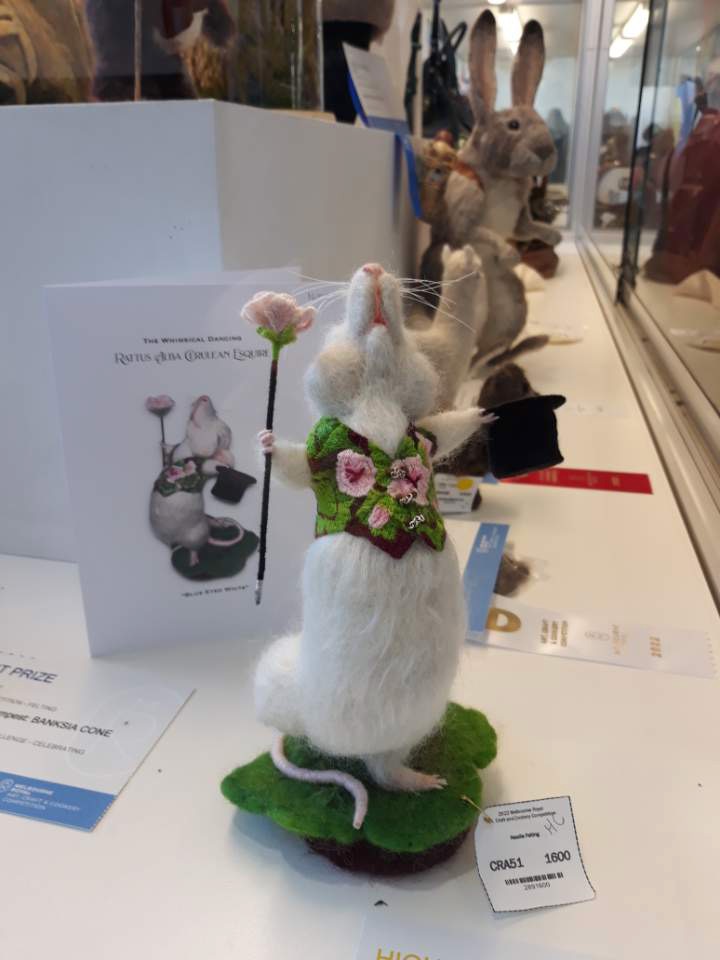
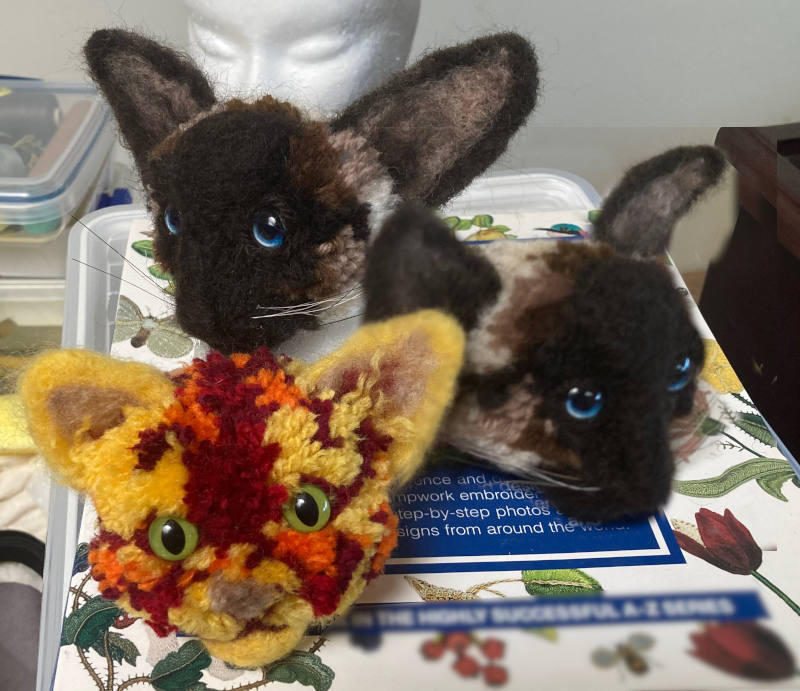
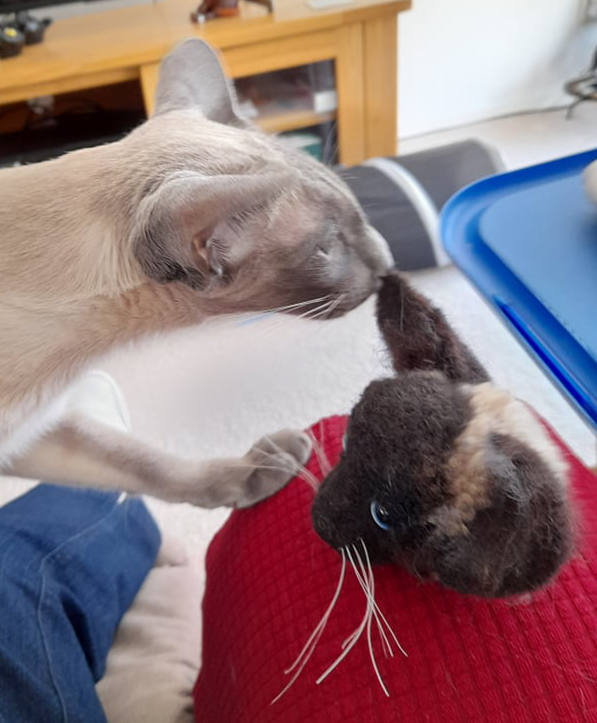
Show & Tell - 14th September 2022

KathyW

Loraine

Pam

Julie

Jill

Heather

Joy

Jane

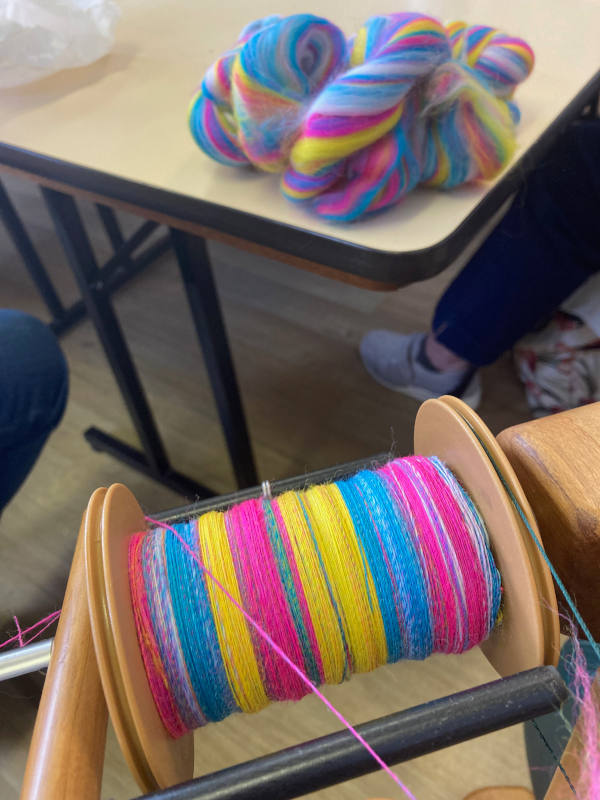
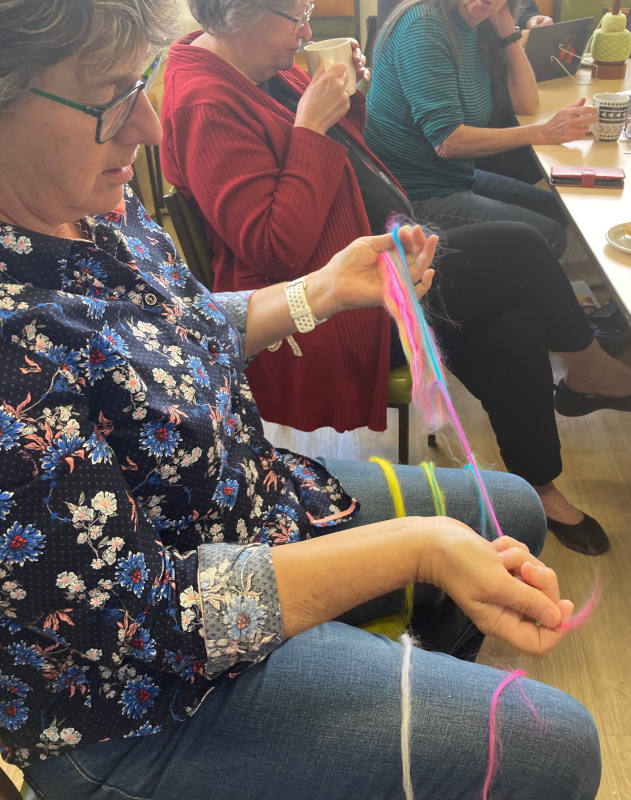
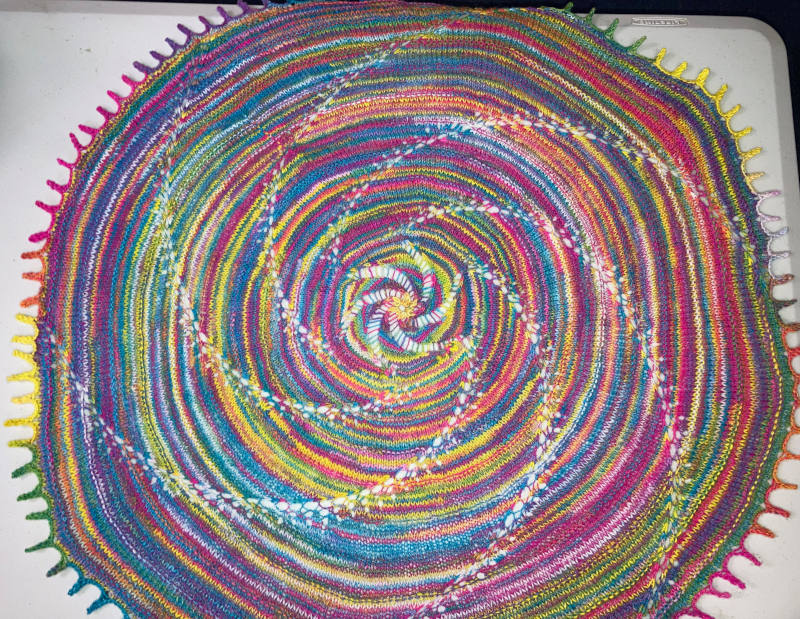
Show & Tell - September Workdays

Jane

September Workshop - Sensational Singles #1

Janet Day (Knoop) was unexpectedly unable to run our planned Workshop, so Jane and Julie came to the rescue learning from Janet so they could bring that knowledge back to our Guild.

The article below draws on Janet’s Workshop notes, and comments made by Jane, Julie and participants  in our own Workshop.
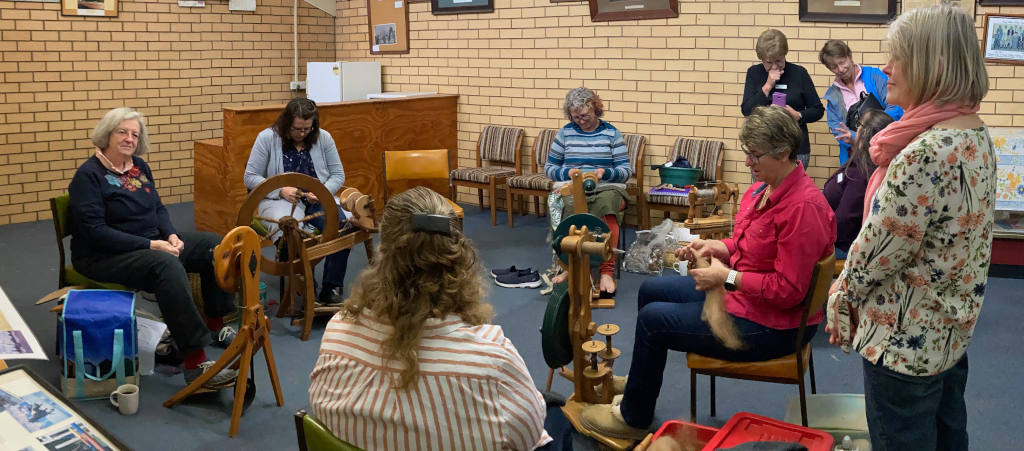
Janet’s Sensational Singles is a fascinating adventure in spinning and felting singles you can use as yarn. No plying. None. It was inspired by the current trend of commercial singles, and Janet felt she could improve on them.
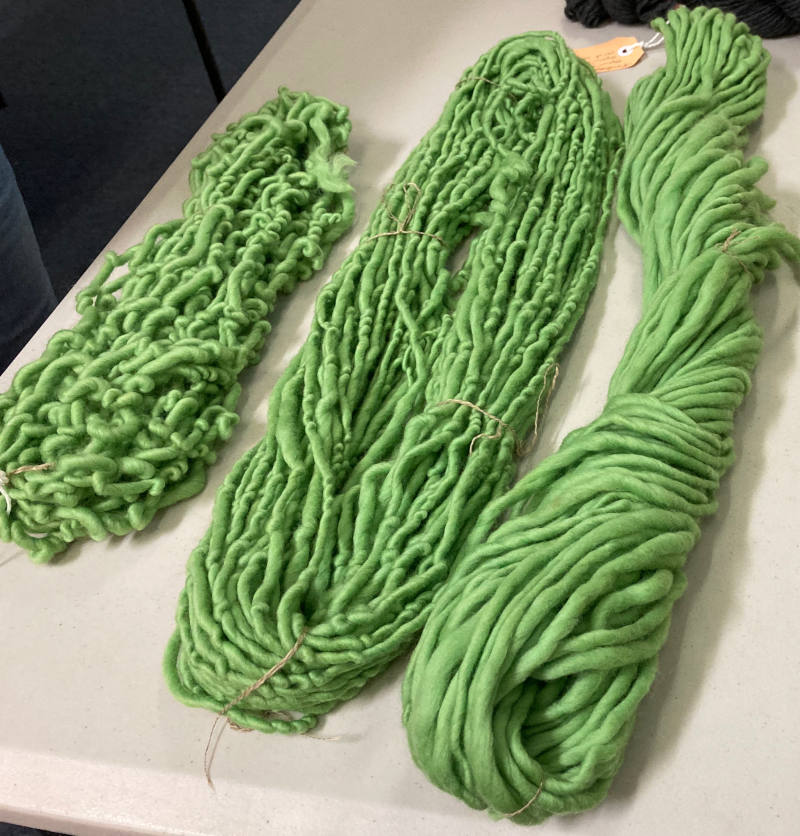
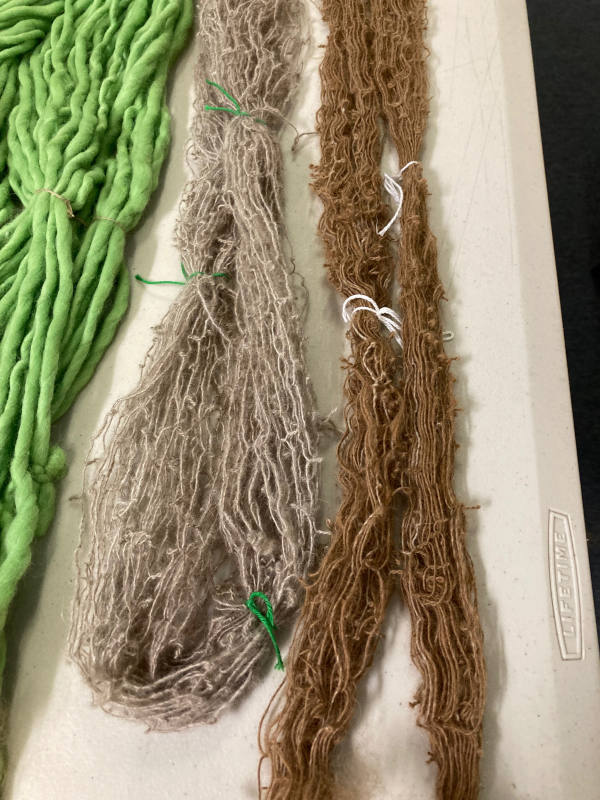
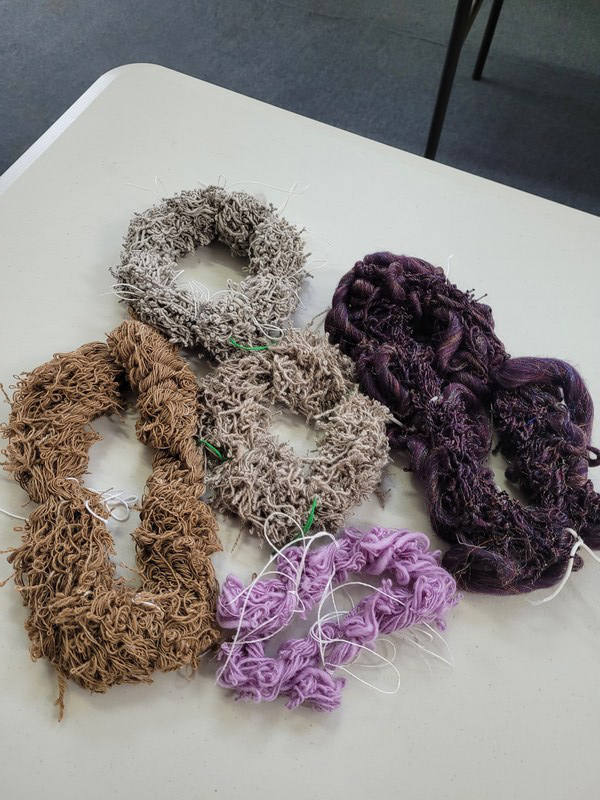
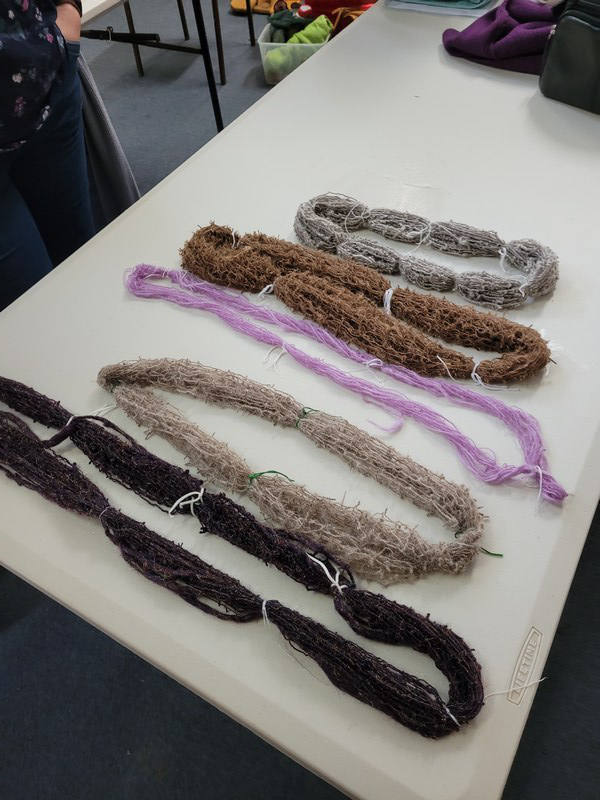
Janet’s Workshop samples brought back to our workshop. Left to right: first (over)spun; after first felting; after (un)spinning and re-felting.

Fibre

This divergence from what’s considered the “norm” starts with your selection of fibre. As Janet says wool top, batts and spinning from the lock can all work – some just better than others. Blends with other fibres such a Cashmere, Camel, Alpaca or Mohair also work but may create a halo. Our Julie was determined to prove pure alpaca would work and she did. She also discovered there’s a knack to it that may work for other fibers as well.

Spinning

To improve the outcome, a Worsted style of spinning is ideal. Worsted is where the fibres all lie parallel producing a yarn that is smoother, stronger, more durable, and less prone to pilling.

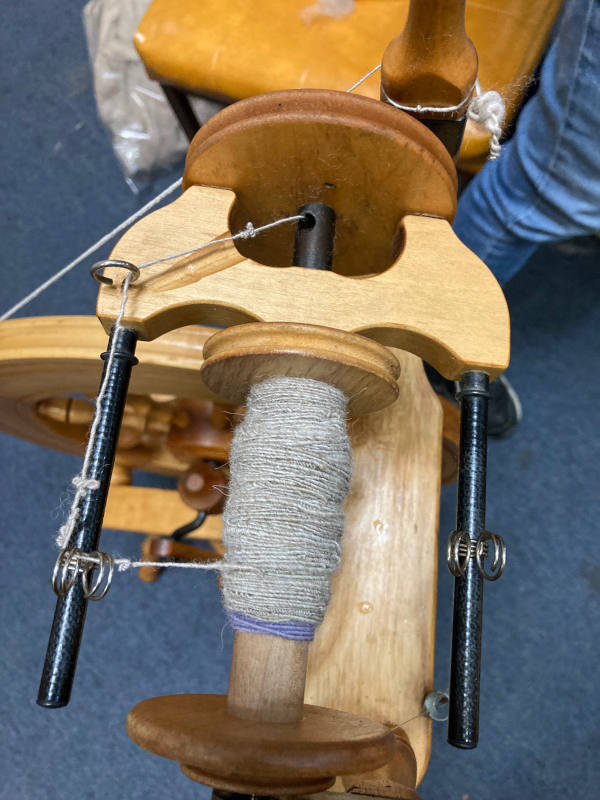
In the initial spinning the single is spun with a higher degree of twist and tension than usual, to produce a single that is smooth, round and firm to the touch. The single on the bobbin will feel firm and there will be very defined lines as the yarn is wound around.

Skeining

Wind off onto your Niddy Noddy with enough tension to keep any coils from forming, and tie off with a cellulose based yarn (cotton or linen) with figure 8 tie, not too tight, and at least 5 ties.

Taking the plunge

Prepare a sink or bucket with hot water – more than hand hot and with a little detergent. Remove your skein from the Niddy Noddy and plunge the skein into the hot water, raising and lowering it rotating as you go. As Janet writes: “As the skein hits the bottom of the sink the individual yarn strands will splay out and this will stop them felting together.”

DO NOT RUB OR AGITATE THE SKEIN IN ANY OTHER WAY. Just dunk it to the bottom of the sink and out again, rotating as you go. “Check a single strand regularly. Try to open up the fibres in the single, you want it to be softly felted but not firm.
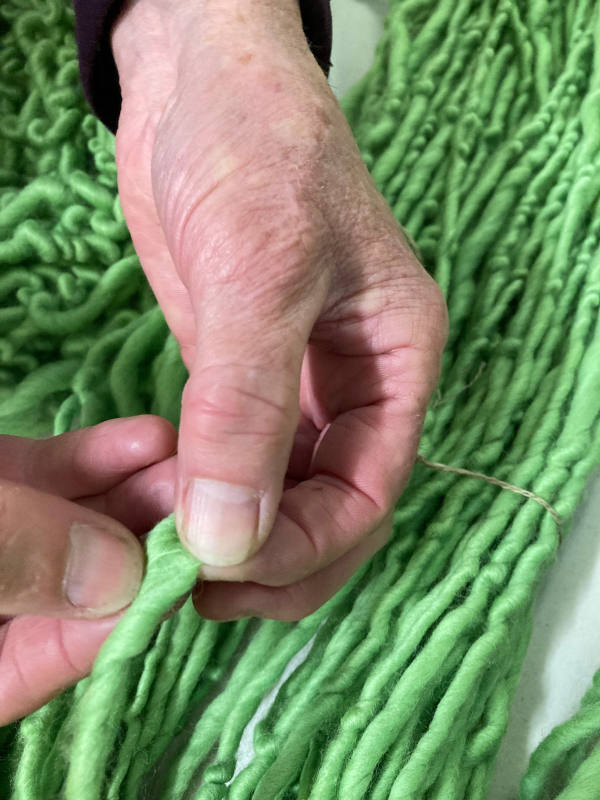
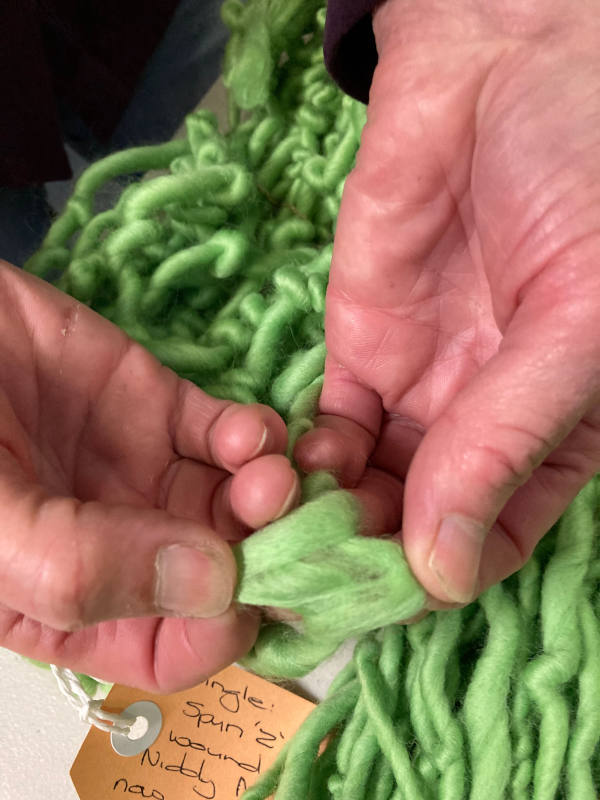
The felters amongst us will recognise what we’re doing here and the next step will come as no surprise …

“Rinse thoroughly in warm water and finish with a cold rinse.”

Squeeze out the skein and hang it up to dry, rotating occasionally throughout the drying process, but do not weight the skein.

If everything has gone according to plan, the singles should not be felted to each other and should move freely.

In Part 2 next month, we’ll finish our Sensational Singles …

Know your yarn

Fibre or Fiber ?

There is no difference in meaning between fiber and fibre. Fiber is the preferred spelling in American English, and fibre is preferred in all the other main varieties of English.

There are several reasons behind these differences. In the 19th century, many American academics yearned for a distinctly American version of English. Meanwhile, at the same time, many British linguists preferred to spell words that English borrowed from French and Latin closer to their original spellings.

In the case of fiber vs. fibre, the second is likely the case. Fibre came to English from Latin through French, and the -re ending is common in French.

Well, there you go!

Fleecy Follies​

What's in a fleece?

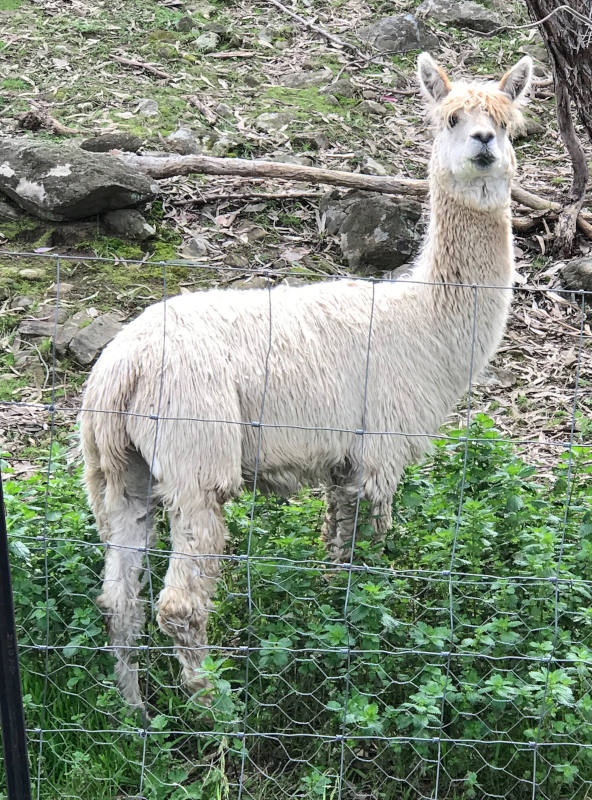
As the days get longer the grazing alpaca has more leisure time to do other alpaca things.

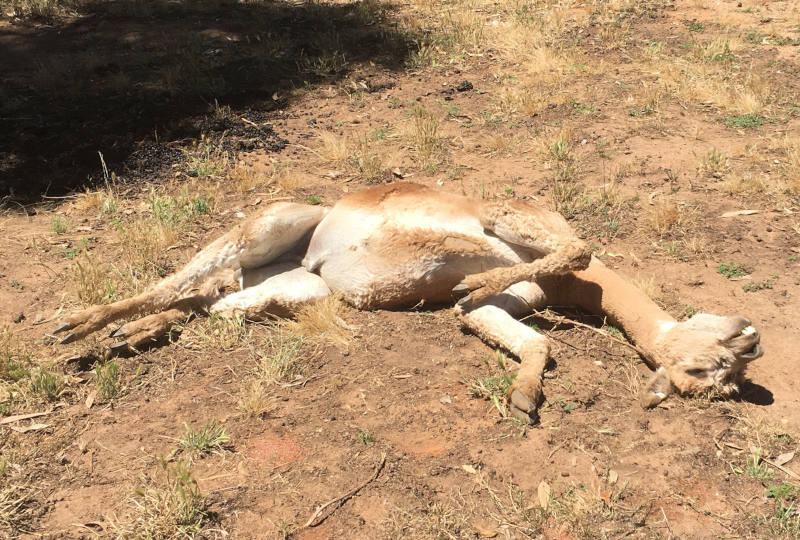
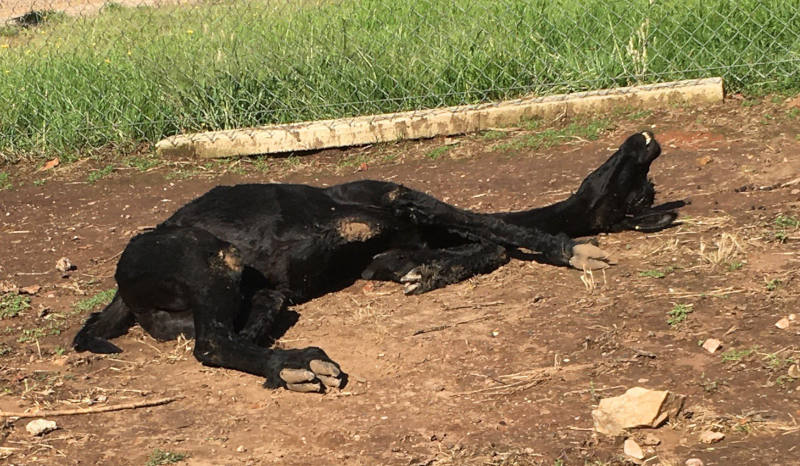
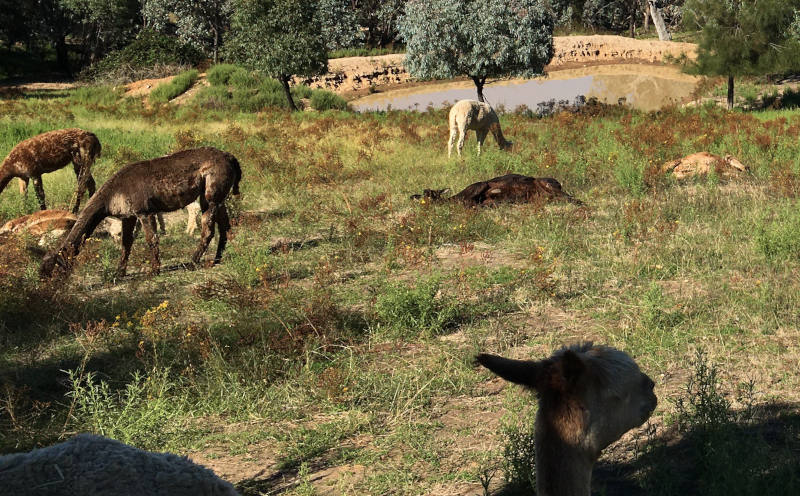
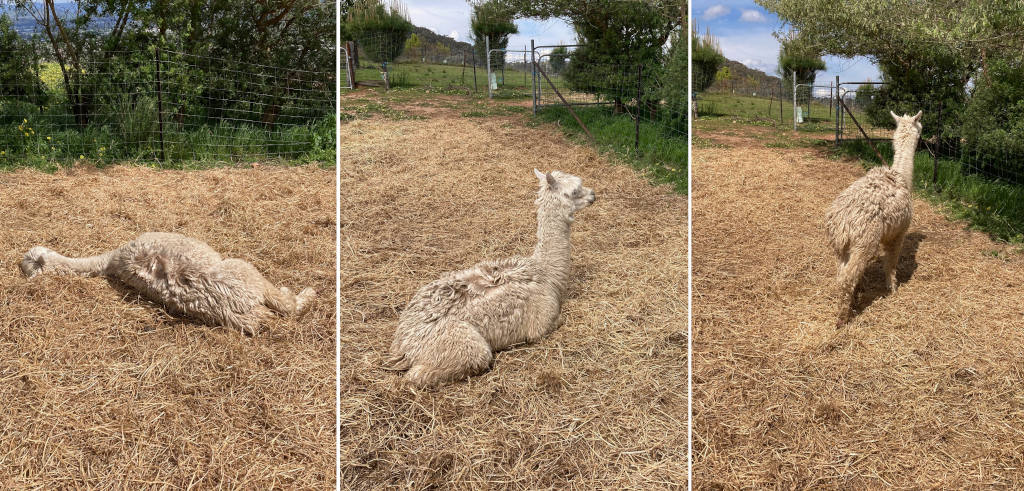
The sun, when it shines, is warmer so sun-baking is in order. Alpacas need vitamin D just like people, except when fully fleeced it can be harder for them to get enough sun exposure. So like the clever cookies they are they will lie down and bare their bellies, where fleece growth is minimal, in the direction of the sun. It’s a habit that often gives new alpaca owners near heart attacks – alpacas lying stretched out on the ground, motionless apart from the occasional swish of a tail or twitch of an ear. Should a human rush over to make sure the prone animal is not dead they usually get the most disdainful stare, where upon the animal stands up and walks off in an un-grateful  huff. And they sun-bake wherever takes their fancy – in a dust bath, on fresh green grass, in their hay, on their feed … and guess where some of that grass, hay, dust etc ends up …

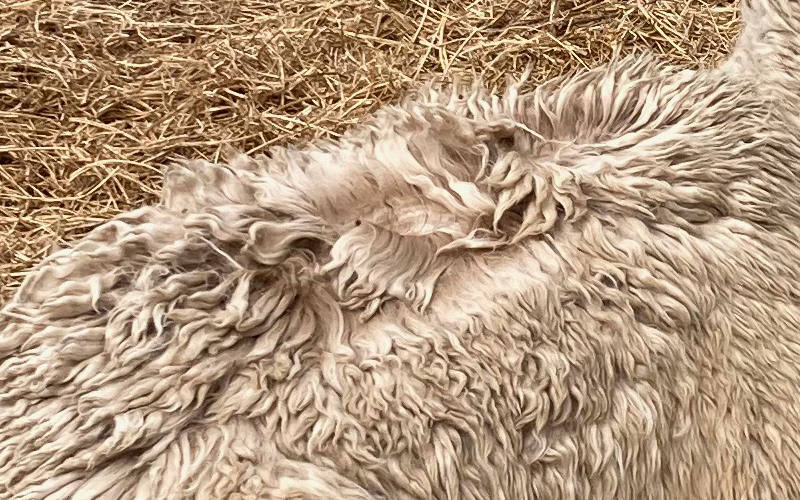
Speaking of dust baths, alpacas LOVE to roll. When they roll in the dust they will often stand up and give an almighty shake, and promptly disappear in a cloud of dust. A lot of that dust makes it’s way along the fleece down to the skin. Sometimes you can even see the stratification of different types of dust when parting the fleece. The amount of all manner of dust and dirt in their fleeces makes spinning unwashed alpaca an abrasive and grubby experience for the spinner and wheel.

We’ve been doing some small scale bale grazing on our property, where we feed hay biscuits out in the paddock. The uneaten stalky bits that will eventually break down and mulch the soil also make comfy cushing places, providing a little insulation from the hard ground. And apparently they are also good to roll in.

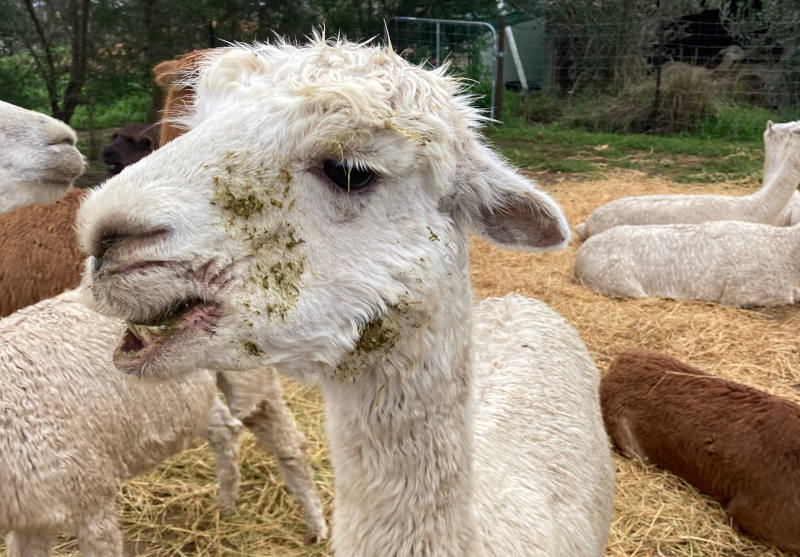
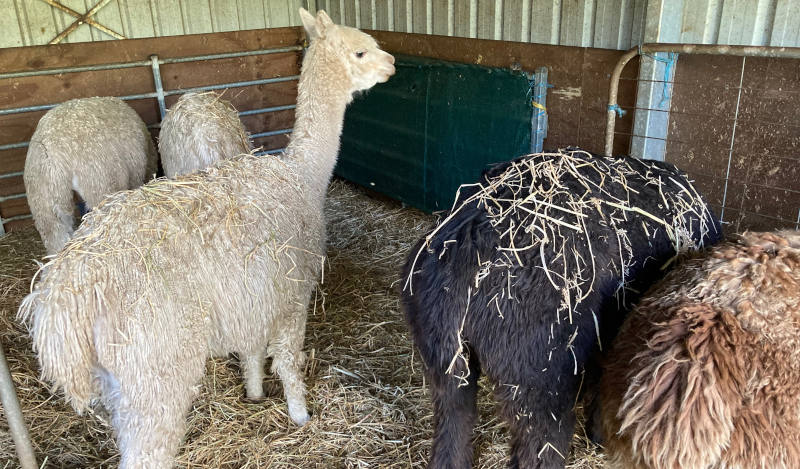
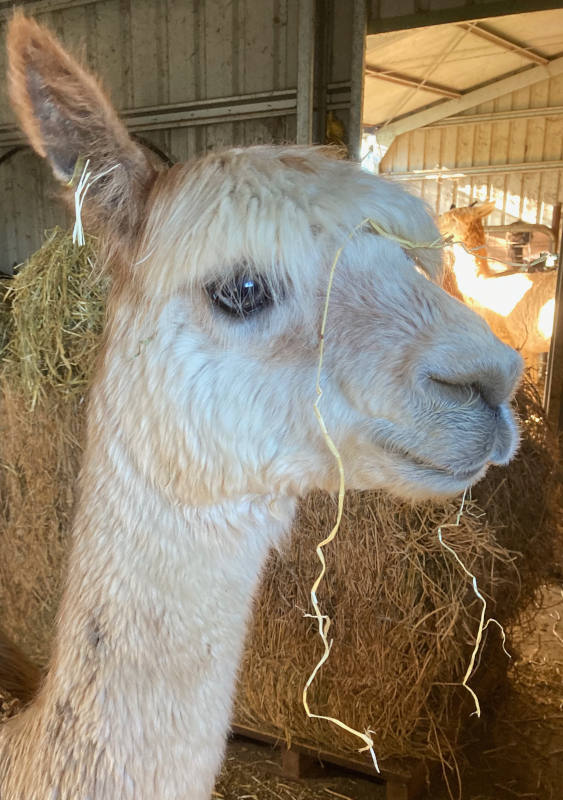
Feed time is also a pretty messy affair. Alpacas will stick their heads into the hay to seek out the tastiest bits, and frequently end up wearing some. They are also somewhat careless pulling great mouthfuls of hay out to chew on while casually looking around and dropping loose pieces of hay all over the floor and each other.

Alpacas also love to rub up on stiff brush, trees and grasses. When we give our alpacas prunings from our tree lucerne they are just as likely to rub up against it and roll on it as eat it! A tall tough grass grows along our creek line and in a few damp places and it is not uncommon to see the alpacas deliberately straddling the clumps, rubbing their long necks into them and giving themselves a belly rub with them. Some of that bark, leaves, grass, gumnuts etc also attaches itself to fleeces.

And let’s not forget alpaca spit. That green slime dries off as lots of tiny, ground up bits of hay and grass, which can also work it’s way into the fleece.

Lastly, alpaca habits of lying around on the ground in all manner of places inevitably results in ants, beetles and other small bugs sometimes dead, sometimes still alive, turning up in shorn fleeces.

It seems the closer we get to shearing, the more effort our charming charges put into gathering stuff in their fleeces. But next time you curse at a dirty alpaca fleece, rest assured the alpaca had a damn good time putting it all in there for you!

Do you have a funny or amazing fiber animal story? If you’d like to share it in a future Newsletter contact the Editor.

Last words ...

A few housekeeping items:
1 – Some members have been getting spam type emails saying they are coming from Guild members. If anyone gets a suspicious looking message, do not open them or any links within them.
2 – Please do not park in front of the Guild’s side double doors. This could cause a problem in the case of an emergency. Please park in the undercover area well clear of the doors and grandstand stairs, or on the grass area.
3 – The drain area outside the Guild door that fills up with water when it rains is becoming DANGEROUS with one of our members slipping in the mud and algae growing there. PLEASE KEEP WELL CLEAR OF THE DRAIN AND MUD even when it appears dry!

Newsletter contributions are always welcome. So, if anyone has anything they want to contribute, or requests for articles, email me!

Cheers for now,

KathyW, Ed.